

Holiday depression can hit anyone. Can you relate to any of these stats?
A Lifestance Health survey found that…
- Nearly 7 out of 10 respondents feel pressured to appear happier than they actually are during the holidays.
- More than half of respondents feel lonely around the holidays (even when they’re with loved ones).
- 57% said the holidays are stressful.
Sound familiar?
Holiday depression. Loneliness. Holiday anxiety. Grief. These challenges are real, and they’re common. But why? And what can you do to improve your mental health during the holidays?
To better understand why the holidays can be so hard, and what actually helps, we asked mental health professionals to answer a series of questions about holiday stress, depression, and coping. Here’s what we discovered.
Therapy.com is user supported. We receive a commission fee from purchases made through BetterHelp links.
Learn More
#1: What Causes Mental Health to Decline During the Holidays?
It’s supposed to be a joyful time of year, right? But instead of experiencing peace and happiness, many people suffer from poor mental health during the holidays. The causes of this decline include relational, physical, and psychological factors.
Chloe Bean, somatic trauma therapist specializing in anxiety and nervous system regulation, offers insights into what’s going on biologically.
“A big reason mental health declines in December is because the nervous system gets pulled in many directions at once,” Bean explains.
“Shorter days, increased social pressures, travel, financial stress, old family roles, unresolved family dynamics bringing up old wounds, and grief all activate different ‘parts’ of us. You might feel pulled between who you are now and who you used to be in your family of origin. On a somatic/body level, you may notice more tension, shallower breathing, fatigue, irritability, and lowered immunity. These are normal responses to overwhelm, not a sign that you are doing things wrong.”
Mary Fleisch, LCSW and licensed trauma therapist, works with people who have grown up in dysfunctional family systems. She explains how unhealthy relationships and unmet expectations can factor into poor mental health during the holidays.
“Mental health declines during the holidays because there is a lot of pressure and buildup around connection and belonging,” says Fleisch. “For many people, this time brings up anxiety, overwhelm, and depression when their relationships don’t match what they see portrayed in the media. We fall into a comparison trap where we measure our lives against what we imagine others have.”
Fleisch adds, “The holidays tend to put realities under a microscope. You’re expected to show up, be grateful, and play nice. But if your family wasn’t safe growing up, or if those dynamics are still unhealthy now, that expectation can feel suffocating.”
Therapy.com is user supported. We receive a commission fee from purchases made through BetterHelp links.
Learn More
Dr. Lisa Pion-Berlin, ACSW, ACHT, licensed hypnotherapist, and CEO of Parents Anonymous, further explains how seasonal and family pressures can cause mental health decline during the holidays.
Pion-Berlin notes, “The holidays can be a vulnerable time for our mental health because there are so many personal, family, and community pressures. People assume everyone wants to celebrate and gather in groups when that may not be what you want. Financial pressures are real and can be overwhelming. Kids can be more demanding because of all the commercialism of the holidays to buy and buy. Also, less sunlight and less outdoor activities slow us down, and we can feel more isolated in a room full of people.”
“Often family gatherings may be the most stressful,” says Pion-Berlin.
“Old roles and old wounds surface in a flash, and the gathering can shift from celebration to heaviness if there is criticism, blaming, passive-aggressive teasing or the sense that you are being judged by relatives you see infrequently.”
Holiday Blues vs. Seasonal Affective Disorder (SAD)
These terms are often confused, but they have distinct definitions:
A person experiencing holiday blues is facing situational stress, grief, or pressure related to the holidays. Someone experiencing SAD, on the other hand, is facing recurring seasonal depression that is linked to light changes and has lasting symptoms.
If you have persistent symptoms of seasonal affective disorder or seasonal depression, a professional evaluation is a good next step. The evaluation can determine whether you have the holiday blues or SAD and provide direction for how to improve your mental health.
#2: What Are the Most Common Triggers During the Holidays?
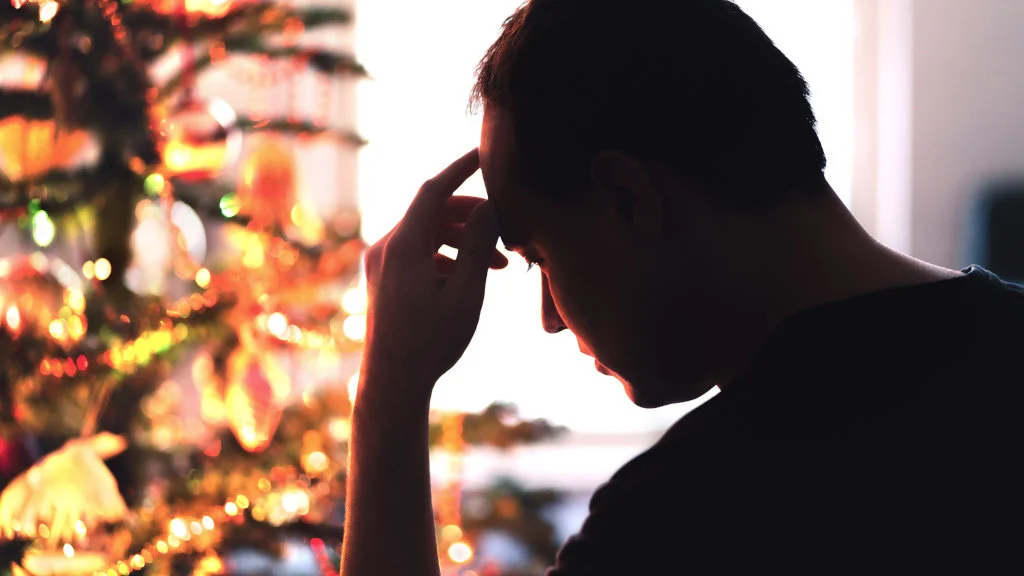
One minute you’re fine, and the next, your mood has spiraled into holiday grief or holiday loneliness. What triggers these effects?
Common holiday stress triggers include:
- Family stress during the holidays
- Perfectionism
- FOMO
- Comparison
- Scrolling social media
- Family gatherings
- Grief/Loss
Loneliness—Even When You’re Not Alone
Rebecca Kase, LCSW and a leading voice in trauma therapy and self-help, offers additional insight into some of these triggers.
“Loneliness is at an all-time high during the holidays,” she explains. “We imagine everyone else feeling connected and joyful, but for many people, this season amplifies disconnection. Loneliness is a physiological state, not a personality flaw.”
Family Dynamics and Old Roles
“The holidays activate old relational patterns,” Kase notes. “Even the most grounded adult can feel pulled back into childhood roles the moment they walk through a parent’s front door. It’s a nervous system response, not a personal failing.”
Bean reports, “Common triggers include perfectionism (I have to make everyone happy and show up put together), people pleasing, grief, comparison, FOMO, and the pressure to be joyful and bubbly when you don’t feel that way.”
Fleisch adds, “Common triggers include scrolling social media and feeling pressured to participate in traditional family gatherings when those relationships carry stress, complicated dynamics, or unresolved feelings.”
Bethany Raab, LCSW, ACS, notes, “One of the common triggers I see as a therapist is forced contact with relatives who dismiss, minimize, or criticize your identity, your values and beliefs, and/or who expect you to play a certain role within the family. Some examples include mistreating and embarrassing the ‘wild’ one, the woman with no children, a family member who is caretaking and making decisions that person/the family might not make themselves.”
Therapy.com is user supported. We receive a commission fee from purchases made through BetterHelp links.
Learn More
Grief, Loss, and Unspoken Pain
“Another trigger that makes the holidays challenging for many is grief,” notes Raab, “and not only for those grieving the death of a loved one. This can include folks who are newly sober who find their old traditions no longer fit, or someone who has recently ended a relationship, too.”
Lana Manikowski, certified life coach for women, explains the pain that individuals who have gone through years of fertility treatment but weren’t able to have a child often face during the holidays.
“For this community,” says Manikowski, “the holidays tend to bring up things most people never think about. The holiday season is packed with kid-centered activities, letters to and pictures with Santa, a mailbox full of cards with family photos, broken dreams of Christmas morning with kids. For women who are childless not by choice, this is heavy and often goes unspoken because, if you’ve not experienced a desire for motherhood that didn’t happen, these types of experiences are often shrugged off or misunderstood.”
Holiday gatherings and seasonal celebrations can exacerbate these distressing feelings.
“It can be tough when you grew up with certain families/cultural traditions but don’t have children to pass them down to,” Manikowski explains.
“Many of the women are also being met with intrusive questions from family members questioning why they don’t have kids yet or are confronted when other family members make pregnancy announcements at holiday gatherings. Things like that can stir up strained family dynamics and be met with comments like ‘get over it’ or ‘you should be happy for so-and-so.’”
#3: How Can You Deal With These Feelings of Holiday Depression?
Coping with holiday depression requires appropriate holiday self care. Experts offer several mental health tips for the holidays:
Nervous System Regulation and Self-care
Bean recommends grounding rituals to help regulate the nervous system and calm unsettling physiological and emotional responses.
“I usually encourage clients to slow down their mornings with one grounding ritual: a favorite cozy drink, some intentional gratitude (note three things you are grateful for and take a slow deep breath in and out for each one) or even orienting to something pleasant in your space around you. If you feel activated in that moment, place a hand on your chest or stomach as you lengthen your exhales. This helps the vagus nerve settle and brings the body out of threat/survival mode.”
Practicing self-care during the holidays also requires commitment and intentionality.
“Commit to rituals and habits that help you stay regulated,” suggests Raab, “such as going to bed on time, moving your body, and eating healthy foods amid the holiday treats.”
Therapy.com is user supported. We receive a commission fee from purchases made through BetterHelp links.
Learn More
Fleish suggests naming emotions.
“One way to deal with these feelings is to stop ignoring them,” she says. “Getting clarity on what’s coming up is important. The impulse is to pretend we don’t have complicated emotions, but that usually makes them grow and come out sideways, like snapping at a parent, getting frustrated with a coworker, or turning that energy inward with self-criticism. When we can name what we’re feeling and why, we can actually take care of ourselves.”
She goes on to say, “That might look like acknowledging: ‘I feel anxious about seeing my mom because she tends to criticize my life choices,’ or ‘I feel sad that my family doesn’t feel like the safe place I wish it was.’ Just naming it takes some of the charge out of it.”
Social Support and Safe People
Raab advises, “Activate your support system by talking with friends and trusted individuals about what you are worried may happen and how they can support you, even from a distance.”
“If you are attending family events, it helps to have a safe person you can check in with when a conversation starts to feel tough,” suggests Manikowski. “Sometimes stepping outside or a brief interruption from a convo makes a huge difference.”
Reducing Comparison and Expectations
One of the most important ways to nurture your mental health during the holidays is to stop comparing your own experience with your idealized view of others.
Fleish recommends, “It helps to notice when you’re comparing your experience to someone else’s. You never really know what’s happening for them internally. They may look put together on the outside, but most people keep their harder moments private. The version of the holidays you see on social media isn’t the full story, and measuring yourself against it will only make you feel worse.”
New Traditions
There’s no set script for celebrating the holidays. If old traditions leave you feeling empty and sad, create new ones that nourish your spirit.
“It is important to give yourself permission to skip the events that drain you,” says Manikowski.
“Some of my clients even choose to travel during the holidays and explore new cities or experience holiday traditions in different countries instead of staying in environments that feel hard to navigate. Some start their own traditions, like adult-only cookie decorating parties, recipe exchanges, or in my community, we do a holiday card exchange so people can send and receive cards from women across the globe who are also childless.”
#4: Practical Advice in the Moment
What practical steps do the experts offer on how to manage holiday stress? Setting boundaries during the holidays can help, as well as learning how to give yourself the care you need.
Mental health professionals recommend:
- Slowing your breath and body
- Stepping away when triggered
- Using prepared boundary scripts
- Leaving early when needed
Raab suggests, “Planning ahead by creating and rehearsing scripts to end a conversation or to excuse yourself to leave can be really helpful in the moment. Statements like, ‘I’m not available to discuss (topic) today,’ ‘Excuse me, I need to use the restroom/step outside,’ and ‘Thanks for the invitation, I must get going now’ are truly easier to say in the moment if you’ve thought about them ahead of time.”
It’s also important to respect the boundaries you’ve established for yourself and remove yourself from situations that aren’t good for your physical, mental, or emotional well-being.
“When at an event and you don’t feel comfortable, focus on how you feel,” says Pion-Berlin.
“Step away from hurtful conversations and create a safe space for yourself and your children. Set a boundary before you walk in the door, have an exit plan and do not get pulled into hurtful baiting. ‘I am not talking about that tonight’ is one response. Take a few minutes, step outside, slow your breathing and minimize alcohol because all of those things reduce emotional reactivity.”
Therapy.com is user supported. We receive a commission fee from purchases made through BetterHelp links.
Learn More
#5: When Should You Seek Professional Help?
If your mental health during the holidays is suffering, it’s important to get support. Whether you’re experiencing holiday anxiety or seasonal affective disorder, an expert can provide necessary insight and help.
“It’s a good idea to seek support when holiday stress starts affecting your sleep, appetite, relationships, or ability to function day-to-day,” Bean notes. “Therapy can help you understand which parts of you feel overwhelmed and give you tools to regulate your body, mind, and emotions so you don’t move through the season feeling alone and burnt out.”
Raab notes that, “It is common and reasonable to have intense emotional reactions and experiences during the holidays… and not all of these necessitate getting a therapist. However, a few times it might be helpful to have a professional to speak to are: if you’re using substances to cope in a way that feels out of control or risky, if you notice increased feelings of hopelessness, are having intrusive thoughts, or notice that you aren’t feeling better after the holidays are over.”
Pion-Berlin adds, “If sadness, anxiety or irritability are present most days for two weeks or more, your sleep, appetite, work or relationships are starting to impair, or you feel hopeless or unsafe, that is the time to get professional help. You do not have to wait until things are a crisis.”
What to Do Now
Mental health experts agree:
- You’re not failing if the holidays feel hard
- Boundaries are a form of self-care
- Loneliness is physiological, not personal
- You’re allowed to opt out of traditions
- Support—professional or personal—helps
The holidays are hard for many, many people. If you’re experiencing grief, loneliness, holiday depression, or family stress during the winter season, you’re not alone. And help is available.
Therapists can work with you to develop coping strategies, navigate stressful situations, and overcome holiday challenges. Find a qualified therapist near you today.
Therapy.com is user supported. We receive a commission fee from purchases made through BetterHelp links.
Learn More